
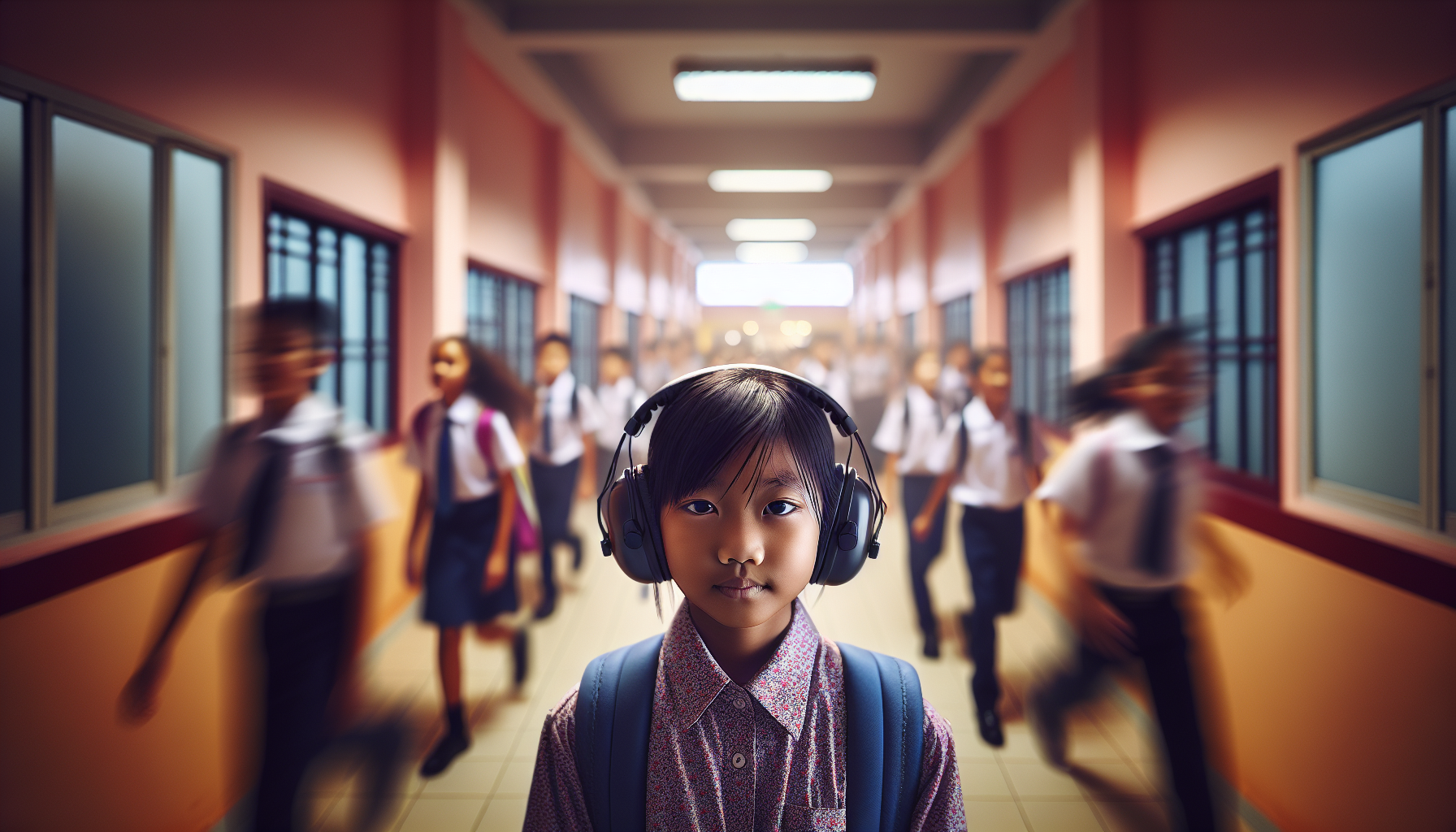
Auditory Sensitivity in Autism: Why Sound Hurts and What Helps
The fire alarm goes off during a drill. Most students cover their ears, grimace, and move toward the exits. But one student drops to the floor, hands pressed hard against the sides of their head, screaming. Another bolts from the room before the teacher can react. A third freezes completely, unresponsive to verbal directions until the alarm stops.
These are not behavioral problems. They are neurological responses to a sound environment that is genuinely painful. For autistic students with auditory sensitivity, sounds that register as merely loud or annoying to neurotypical peers can feel like an assault — sharp, overwhelming, and physically distressing.
Understanding why this happens — and what actually helps — is essential for every educator, therapist, and parent working with autistic children.
What Is Auditory Sensitivity?
Auditory sensitivity, sometimes called auditory hypersensitivity or hyperacusis, is an amplified response to sound. It is not about hearing better or having sharper ears. It is about how the brain processes auditory input — specifically, how it filters, prioritizes, and regulates incoming sound signals.
Research estimates that between 50% and 70% of autistic individuals experience some degree of auditory hypersensitivity. For many, it is one of the most disruptive sensory challenges they face, affecting their ability to participate in classroom instruction, social activities, meals, and transitions throughout the school day.
Auditory sensitivity can present in different ways:
- Volume sensitivity — sounds at normal conversational levels feel uncomfortably loud
- Frequency sensitivity — certain pitches (often high-frequency sounds like beeping, buzzing, or squealing) are particularly distressing
- Unpredictability sensitivity — sudden or unexpected sounds trigger stronger reactions than continuous noise
- Cumulative overload — environments with multiple simultaneous sound sources become unbearable over time, even when no single sound is the problem
The Neuroscience: Why Sound Hits Differently in Autistic Brains
The past two decades of neuroimaging and electrophysiology research have given us a much clearer picture of what is happening in the autistic brain during auditory processing. Several key differences have been identified.
Amygdala Hyperactivation
The amygdala — the brain’s threat-detection center — shows heightened activation in autistic individuals when processing environmental sounds. A 2015 study by Green and colleagues using fMRI imaging found that autistic participants showed significantly greater amygdala responses to everyday sounds compared to neurotypical controls. The brain is essentially flagging ordinary sounds as potential threats, triggering a fight-or-flight cascade that explains the intense distress responses educators observe.
Reduced Habituation
Neurotypical brains gradually “tune out” repetitive or constant background sounds — a process called habituation. The hum of an HVAC system, the buzz of fluorescent lights, the ambient noise of a hallway — these fade into the background within minutes for most people. Research by Pellicano and colleagues (2013) demonstrated that autistic individuals show significantly reduced habituation to auditory stimuli. The sound that a neurotypical student stops noticing after five minutes may remain at full intensity for an autistic student all day long.
Cortical Over-Connectivity
Studies using diffusion tensor imaging have shown that autistic brains often have increased local connectivity in auditory cortex regions, combined with atypical long-range connections between auditory areas and other brain regions. This over-connectivity may explain why sounds trigger not just auditory experiences but also emotional, physical, and cognitive responses that seem disproportionate to the stimulus. The sound is not just heard — it reverberates through neural networks in ways that amplify its impact.
Atypical Superior Temporal Processing
The superior temporal gyrus, a primary auditory processing region, shows structural and functional differences in autistic individuals. Research by Gomot and Wicker (2012) found altered neural responses to auditory novelty and deviation in this region, contributing to the difficulty autistic individuals have with unexpected sounds and sound changes in their environment.
Common Triggers in School Environments
Schools are among the most acoustically challenging environments for students with auditory sensitivity. Here are the most common triggers, ranked roughly by how frequently they are reported:
Fire Alarms and Emergency Drills
Consistently rated as the single most distressing sound in school settings. The combination of extreme volume, high frequency, and unpredictability makes fire drills a reliable source of crisis for auditory-sensitive students. Many schools now provide advance warning and allow sensitive students to exit before the alarm sounds.
Cafeterias
Hard surfaces, echoing architecture, hundreds of simultaneous conversations, clattering trays, scraping chairs — the school cafeteria is an acoustic nightmare. Sound levels in school cafeterias regularly exceed 80-85 decibels, comparable to a garbage disposal or heavy traffic.
Gymnasiums and Assemblies
Large reverberant spaces with amplified sound systems, cheering, whistles, and echoing voices create environments that can overwhelm even students with mild sensitivity.
Bells and Intercoms
The sudden onset is often more distressing than the volume. Many autistic students report that class-change bells trigger a startle response every time, even after years of exposure — a direct consequence of reduced habituation.
Fluorescent Light Hum
Imperceptible to most people, the 60-hertz hum and flicker of fluorescent lighting is a constant low-level irritant for many auditory-sensitive students. It contributes to cumulative sensory fatigue even when the student cannot identify it as the source of their discomfort.
Peer Noise
Group work, playground activity, hallway transitions, and even quiet classroom chatter can create sound environments that are difficult for sensitive students to tolerate over extended periods.
Behavioral Signs to Watch For
Auditory sensitivity does not always present as obvious distress. Educators and parents should watch for these signs:
- Covering ears — hands over ears, pulling a hood up, pressing against the head with objects
- Fleeing or avoidance — leaving rooms, refusing to enter certain spaces, hiding
- Meltdowns — intense emotional responses that may appear disproportionate to the situation but reflect genuine sensory overload
- Shutdowns — going quiet, becoming unresponsive, appearing to “check out”
- Self-stimulatory behavior — humming, vocalizing, or making repetitive sounds to mask distressing environmental noise
- Increased anxiety — agitation, restlessness, or irritability that builds throughout the day as sensory fatigue accumulates
- Task avoidance — what looks like non-compliance may actually be a student trying to escape a sound environment they cannot tolerate
The key insight: many “behavior problems” in autistic students are actually sensory problems with behavioral symptoms. Addressing the sensory environment often resolves the behavior without any behavioral intervention at all.
Auditory Sensitivity vs. Auditory Processing Disorder
These two conditions are frequently confused, but they are distinct:
Auditory sensitivity (hyperacusis) is about the intensity of sound perception. The student hears too much, too loudly, or with too little filtering. The sound signal itself is received clearly — it is just overwhelming.
Auditory processing disorder (APD) is about the interpretation of sound. The student may hear at normal volumes but struggle to distinguish speech from background noise, follow multi-step verbal instructions, or differentiate similar-sounding words. The signal arrives but gets garbled in processing.
An autistic student can have one, both, or neither. They often co-occur, but the interventions are different. Reducing volume helps auditory sensitivity. Improving signal clarity (speaking slower, reducing background noise, using visual supports) helps auditory processing disorder. A thorough audiological evaluation can differentiate between the two.
What the Research Shows
The evidence base for auditory processing differences in autism has grown substantially in recent years. Here is what current research supports:
- Prevalence is high. A meta-analysis by Ben-Sasson et al. (2009) found that sensory over-responsivity, including auditory sensitivity, was significantly more prevalent in autistic individuals than in any other clinical or neurotypical population studied.
- It is neurologically measurable. EEG studies consistently show atypical auditory evoked potentials in autistic individuals, including larger P1 amplitudes and atypical mismatch negativity responses (Lepisto et al., 2005; Gomot et al., 2011).
- It affects learning. A 2017 study by Ashburner, Ziviani, and Rodger found that sensory processing differences, including auditory sensitivity, were significant predictors of academic underperformance in autistic students, independent of cognitive ability.
- Environmental modification works. While large-scale controlled studies are limited, multiple smaller studies and clinical reports consistently show that reducing environmental sound levels, providing noise-reducing tools, and allowing sensory breaks significantly reduces distress behaviors and improves engagement (Pfeiffer et al., 2019).
- Individual variation is enormous. The specific frequencies, volumes, and sound types that trigger distress vary widely between individuals. Blanket approaches are less effective than individualized sensory profiles (Tavassoli et al., 2014).
Practical Solutions That Work
Environmental Modifications
The most effective intervention is often changing the environment rather than expecting the student to adapt to it:
- Replace fluorescent lighting with LED alternatives where possible
- Add sound-absorbing panels, carpeting, or soft materials to hard-surface rooms
- Place tennis balls or felt pads on chair and table legs to reduce scraping sounds
- Provide alternative lunch locations for students who cannot tolerate cafeteria noise
- Allow early dismissal before bell rings or hallway transitions
- Notify auditory-sensitive students before fire drills whenever safety protocols allow
Noise-Reducing Headphones
Noise-reducing headphones are among the most widely recommended tools for managing auditory sensitivity in school settings. The key is choosing headphones designed to reduce volume without eliminating sound entirely — students still need to hear instruction and safety information. Over-ear passive noise-reducing headphones that lower decibel levels by 20-30 dB are generally preferred over active noise-canceling earbuds for school use, because they attenuate sound evenly rather than selectively canceling certain frequencies.
Sound Management Tools
Sound management tools such as white noise machines or sound conditioners can help mask unpredictable environmental sounds with consistent, neutral sound. Some classrooms use these successfully near workstations to create a more predictable auditory environment. Portable options allow students to use them at their desk during independent work.
Gradual Desensitization
For specific sound triggers (like fire alarms), gradual desensitization protocols — developed with an occupational therapist or behavioral specialist — can help reduce the intensity of the stress response over time. This involves controlled, incremental exposure to the triggering sound at increasing volumes, paired with coping strategies. This should never be attempted without professional guidance, and it should never be forced.
Sensory Breaks
Scheduled breaks in a quiet, low-stimulation space allow the student’s nervous system to recover from cumulative auditory input. These are not rewards and should not be contingent on behavior — they are a regulatory tool, like taking a break from bright sunlight by stepping into shade.
Classroom Accommodations
The following accommodations can be documented in IEPs or 504 plans:
- Preferential seating away from sound sources (HVAC units, hallway doors, windows)
- Permission to use noise-reducing headphones during independent work, tests, and transitions
- Advance notice of loud events (assemblies, drills, construction)
- Access to a quiet workspace or break area
- Modified participation in acoustically overwhelming activities (assemblies, pep rallies)
- Written or visual instructions to supplement verbal directions
- Reduced reliance on auditory signals (use visual timers instead of verbal countdowns)
- Testing in a separate, quiet location
Practical Next Steps
If you are supporting a student with auditory sensitivity, here is where to start:
- Observe and document. Track which environments, times of day, and specific sounds trigger distress. Look for patterns — cumulative overload is often missed because no single sound seems like the problem.
- Get an evaluation. An audiologist can assess for both hyperacusis and auditory processing disorder. An occupational therapist can develop a comprehensive sensory profile that includes auditory processing.
- Modify the environment first. Before asking the student to tolerate the sound, ask whether the sound is necessary. Many school noise sources can be reduced, softened, or eliminated.
- Provide tools. Noise-reducing headphones, sensory breaks, and predictable routines cost little and help enormously.
- Build it into the plan. Formal accommodations in an IEP or 504 ensure consistency across teachers, classrooms, and school years.
- Listen to the student. Autistic students — especially older ones — are often the best source of information about what sounds are problematic and what helps. Ask, and take their answers seriously.
Auditory sensitivity is not a preference or a behavior. It is a neurological difference that shapes how autistic students experience the world. When we understand the neuroscience behind it, the responses make perfect sense — and so do the solutions.
This article is for informational purposes only and does not constitute medical or therapeutic advice. Consult with a qualified occupational therapist or audiologist for individualized assessment and intervention planning.