

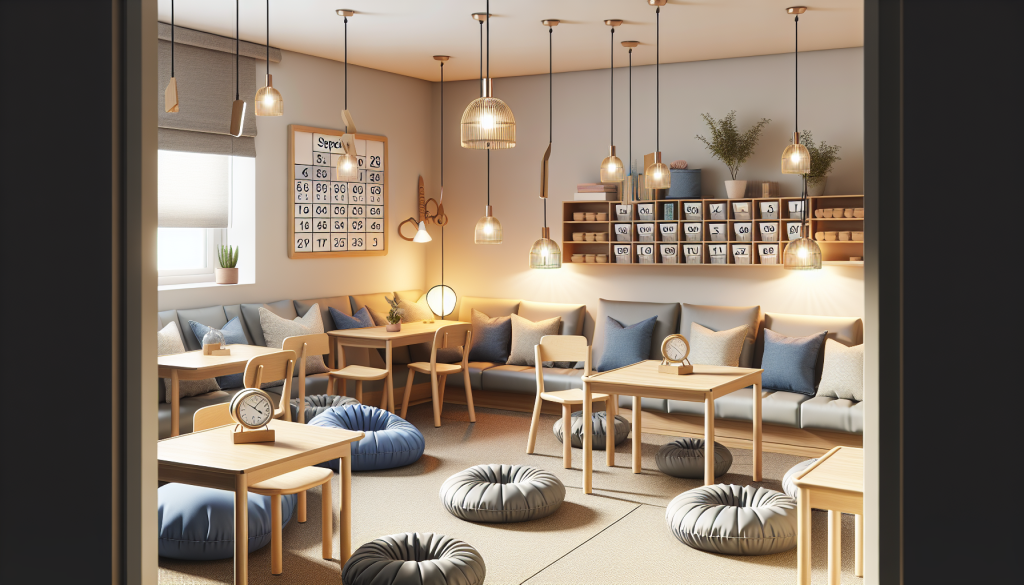
Creating a Sensory-Friendly Classroom: A Step-by-Step Guide
Published January 22, 2025
Every classroom is a sensory environment — whether you’ve designed it to be one or not. Fluorescent lights hum and flicker. Hallway noise bleeds through the door. Twenty-five students generate a constant low hum of movement, sound, and visual activity. For most students, this is just background noise. For students with sensory processing differences, it can be the thing that makes learning impossible.
A sensory-friendly classroom isn’t a special education classroom. It’s a well-designed learning environment that accounts for the fact that students process sensory information differently. The modifications benefit students with SPD, autism, ADHD, and anxiety — but they also benefit every other student in the room. Reducing sensory chaos improves focus, reduces behavioral incidents, and creates a calmer learning environment for everyone.
Here’s how to build one, step by step.
Step 1: Audit Your Current Environment
Before you change anything, spend 15 minutes sitting in your classroom with the intent to notice what you normally tune out. Go through each sensory system:
Lighting
- Are you using overhead fluorescents? Can you see them flicker? Can you hear them hum?
- Is there natural light? How much? Does it create glare on screens or whiteboards?
- Are there areas that are significantly brighter or dimmer than others?
Sound
- What’s the baseline noise level with students out of the room? (HVAC, hallway, outside traffic)
- What’s the noise level during instruction? During transitions? During group work?
- Are there sudden, unpredictable sounds? (PA announcements, door slamming, neighboring classroom)
Visual Input
- How much is on the walls? Are there busy bulletin boards, hanging mobiles, or multiple color schemes competing for attention?
- Can students see the hallway through windows in the door? Is foot traffic visible?
- Is the classroom visually organized or cluttered?
Movement and Space
- How close together are the desks? Can students move without bumping into each other?
- Is there space for movement breaks?
- Are high-traffic areas (pencil sharpener, sink, door) creating bottlenecks?
This audit isn’t about finding problems — it’s about seeing your classroom through the sensory lens your students experience every day. Write down what you notice. It’ll inform every decision that follows.
Step 2: Modify the Environment
Start with the changes that cost nothing and affect everyone.
Lighting Modifications
Fluorescent lighting is the single biggest sensory offender in most classrooms. Even when you can’t see the flicker, it’s there — cycling at a frequency that some students’ nervous systems detect and react to with fatigue, headaches, or agitation.
Free/low-cost fixes:
- Turn off some banks of overhead lights and use lamps instead. Even one row of fluorescents off makes a noticeable difference.
- Use natural light from windows as your primary light source when possible.
- Install fluorescent light covers or diffusers (translucent fabric panels that fit over the light fixtures) — these reduce flicker and soften the light for under $30 per panel.
- Create a “low light” zone in one area of the room for students who need visual rest.
Sound Management
You can’t eliminate noise in a classroom, but you can reduce it and make it more predictable.
Practical solutions:
- Put tennis balls or felt pads on chair legs to eliminate scraping sounds.
- Add soft materials to the room (rugs, fabric wall hangings, curtains) that absorb sound.
- Use a visual or vibration-based attention signal instead of a loud bell or clap pattern.
- Provide noise-canceling headphones or earplugs as an available tool during independent work.
- Preview unexpected sounds when possible — “The fire drill is scheduled for 10:15 today.”
Visual Simplification
Classroom decoration is a balance. Visual supports (word walls, schedules, anchor charts) serve important instructional purposes. But there’s a tipping point where visual richness becomes visual overload.
Guidelines:
- Limit wall displays to what’s currently relevant. Rotate displays rather than adding to them.
- Use a consistent color scheme for instructional displays — don’t make every poster a different color.
- Keep the front teaching wall the most visually clean, since that’s where students need to focus.
- Store supplies in opaque containers with labels rather than clear bins where contents are visible.
- Create one “quiet” wall — a section with minimal or no displays that students can look at when they need visual rest.
Layout and Spacing
How furniture is arranged affects movement flow, personal space, and the overall energy of the room.
- Create clear pathways between desks that don’t require students to squeeze past each other.
- Position students with tactile sensitivity away from high-traffic areas where accidental bumping is likely.
- Face desks away from the door or hallway windows for students who are visually distracted by movement.
- Ensure there’s at least one area where a student can sit with physical space around them.
Step 3: Create Sensory Zones
A sensory-friendly classroom isn’t one uniform environment — it’s a space with intentional variety. Different areas of the room should serve different sensory purposes. You don’t need a huge classroom to do this. Even small, clearly defined zones make a significant difference.
The Calming Corner
This is the most essential sensory zone. It’s a designated space where students can go to de-escalate, regroup, and return to a regulated state. It is not a punishment. It is not a “time out.” It’s a tool — and framing it that way from day one is critical to its success.
What to include:
- Reduced lighting (a small lamp instead of overhead lights)
- Comfortable seating — a Rocking Soft Sensory Chair is ideal here because it provides calming vestibular input (gentle rocking) in a soft, contained form that feels safe and soothing
- A small selection of tactile tools (fidgets, stress balls, textured items)
- Noise-canceling headphones
- A visual timer so the student can self-manage their break
- Simple visual cues for regulation strategies (“Take 5 deep breaths,” “Squeeze and release”)
If you have the space and mounting capability, a Doorway Therapy Swing installed in or near the calming corner adds vestibular input that can be deeply regulating. It takes up minimal floor space when not in use and can be the single most effective tool in your calming area.
Rules for the calming corner:
- Available to all students, not just those with IEPs
- Student-initiated whenever possible (teach self-advocacy)
- Time-limited (5-10 minutes) with a visual timer
- No academics in this space — it’s for regulation only
- Never used as punishment or associated with being “in trouble”
The Movement Zone
Some students need movement to think. Fighting that need wastes everyone’s time and energy. Instead, create a space where movement is allowed and purposeful.
What to include:
- A Kurve Rocker — a curved balance board that lets students rock and shift weight while standing or sitting, providing vestibular and proprioceptive input without leaving their work area
- A standing desk option
- Resistance bands tied to chair legs for leg bouncing
- A small area with floor space for stretching or yoga poses
The movement zone doesn’t have to be big. Even a 4×4-foot area with a rocker board and a standing surface gives students who need to move a sanctioned place to do it.
Focus Stations
These are work spaces designed for reduced sensory input — helpful during testing, independent reading, or any task requiring sustained concentration.
What to include:
- Study carrels or privacy screens
- A Weighted Lap Pad at each station — the deep pressure input provides a grounding, organizing effect that helps students maintain focus without needing to move
- Noise-canceling headphones or white noise options
- Reduced visual distractions (facing a plain wall, away from windows and doors)
Focus stations work for all learners, not just those with sensory needs. Many neurotypical students also do their best work in low-stimulation environments. Making these stations available to everyone normalizes their use and reduces stigma.
Step 4: Rethink Seating
The standard school chair — rigid, flat, immobile — is the worst possible seating option for students who need movement or proprioceptive input to regulate. Flexible seating isn’t a trend; it’s an evidence-based accommodation that recognizes what neuroscience has been telling us for decades: some brains work better when the body is in motion.
Flexible seating options to consider:
- Wobble stools/chairs: Allow subtle movement without leaving the seat
- Ball chairs: Engage core muscles and allow bouncing
- Rocking chairs: Provide calming linear vestibular input
- Floor seating: Cushions, bean bags, or low tables for students who work better on the ground
- Standing desks: For students who regulate better on their feet
- Resistance band chairs: Standard chairs with a resistance band across the front legs for leg bouncing
You don’t need to replace every chair in your room. Start with two or three alternative options and let students discover what works for them. Rotate options if demand exceeds supply.
Step 5: Build a Classroom Sensory Toolkit
A classroom sensory toolkit is a collection of portable sensory tools that students can access as needed throughout the day. Think of it as the classroom first-aid kit for sensory regulation.
Essential toolkit items:
For proprioceptive input (calming, grounding):
- Weighted lap pads
- Resistance putty or therapy bands
- Hand fidgets with resistance (not just spinning — squeezing, pulling, twisting)
For vestibular input (alerting, organizing):
- Seat cushions that allow movement
- A rocking option in the calming corner
- Permission slips for movement breaks (walking errands, wall push-ups in the hallway)
For tactile input (focusing, calming):
- Textured fidgets (smooth, bumpy, squishy)
- Velcro strips under desks for discreet tactile input
- Stress balls
For auditory regulation:
- Noise-canceling headphones (at least 2 pairs)
- Earplugs
For oral motor input:
- Chew tools (necklaces, pencil toppers) — dedicated to individual students for hygiene
- Water bottles with chewy straws
- Crunchy snack options during snack time
For visual regulation:
- Sunglasses or tinted overlays
- Privacy screens/folders
- Liquid motion timers or visual calming tools
Toolkit management tips:
- Store items in a clearly labeled, accessible location
- Teach students how to use each tool and when it’s appropriate (beginning of year instruction)
- Assign individual tools for hygiene reasons (anything that goes in or near the mouth)
- Clean shared tools daily
- Replace items that show wear — broken fidgets become distractions, not tools
Step 6: Implementation Tips
The best sensory-friendly design fails without intentional implementation. Here’s what makes the difference between a classroom with sensory stuff and a classroom that actually works.
Teach It Explicitly
Don’t just add tools and zones and hope students figure it out. Spend time at the beginning of the year teaching:
- What each zone is for and how to use it
- What each tool does and when it helps
- How to request a sensory break (self-advocacy language)
- How to return to work after a break (transition routine)
Normalize, Don’t Spotlight
The language you use matters. “Everyone’s brain works differently, and some of us need different things to do our best work” is better than “This corner is for students who have trouble controlling themselves.” Make sensory tools available to everyone. The students who need them will use them; the novelty will wear off quickly for everyone else.
Observe and Adjust
Your first setup won’t be perfect. Watch how students actually use (or avoid) the spaces and tools you’ve provided. If the calming corner is empty, maybe it’s in a location that feels too public. If the fidget bin is a source of conflict, maybe you need individual assignments instead of a shared collection. Let student behavior guide your adjustments.
Communicate with Families
Send home a brief explanation of your classroom’s sensory-friendly design. Parents of students with sensory needs will be relieved. Parents who are unfamiliar with the concept will appreciate understanding why the classroom looks different from what they remember. This also opens the door for parents to share what works at home — valuable intel for your classroom.
Collaborate with Your OT
If your school has an occupational therapist, they are your greatest resource. They can help you identify which students need specific accommodations, recommend tools, and design sensory diets that integrate with your classroom routine. Even one consultation can dramatically improve your setup.
Budget Considerations
Budget is a real constraint. Here’s how to approach it:
Phase 1 — Free ($0):
- Turn off a row of fluorescents
- Rearrange furniture for better flow
- Designate zones with tape on the floor
- Reduce wall displays
- Tennis balls on chair legs
- Resistance bands on chairs (from the PE closet)
Phase 2 — Low Cost ($50-200):
- Fluorescent light covers
- Noise-canceling headphones (2-3 pairs)
- Basic fidget collection
- Visual timer
- Weighted lap pads
- Seat cushions
Phase 3 — Investment ($200-500+):
- Alternative seating (rocking chairs, wobble stools)
- Standing desk converter
- Comprehensive sensory toolkit
- Calming corner furniture
- Doorway swing installation
Funding sources to explore:
- Title I funds (if your school qualifies)
- Special education department budget
- PTA/PTO grants
- DonorsChoose or similar crowdfunding platforms
- Local education foundation grants
- Occupational therapy department equipment budget
Start where you are with what you have. A single calming corner with a rocking chair and two pairs of headphones is better than waiting three years for a fully outfitted sensory room that never gets funded. Small changes, implemented consistently, make a real difference in students’ daily experience.
Measuring Success
How do you know if your sensory-friendly modifications are working? Track these indicators:
- Office referrals: Are behavioral incidents decreasing?
- On-task behavior: Are students spending more time engaged in learning?
- Student self-reports: Do students say the classroom feels better?
- Calming corner usage: Are students using it proactively (before meltdown) rather than reactively (after)?
- Tool usage patterns: Which tools get used most? Which gather dust?
- Transition smoothness: Are transitions between activities less chaotic?
Document these observations. They justify continued investment, inform adjustments, and provide evidence for IEP teams about what environmental modifications support specific students.
A sensory-friendly classroom isn’t a luxury or a niche accommodation. It’s good teaching environment design, grounded in neuroscience and practical experience. Every student processes sensory information. The question isn’t whether your classroom is a sensory environment — it always is. The question is whether you’ve designed it to work with your students’ nervous systems instead of against them.
Consult your occupational therapist for individualized recommendations on classroom modifications and sensory tools for specific students.
