

Setting Up an Indoor Swing: Ceiling Mount, Doorway, or Freestanding Frame?
Published May 21, 2025
You have decided your child, student, or client needs a therapy swing. Now comes the question that stops most people: how do I actually set it up indoors? The answer depends on your setting, your budget, your building, and how permanent you want the installation to be.
There are three main options — ceiling mount, doorway mount, and freestanding frame. Each one has real advantages and real limitations. This guide walks through all three in enough detail to help you make a confident decision.
Option 1: Ceiling Mount
A ceiling mount is a heavy-duty eye bolt, hook, or mounting plate installed directly into a structural ceiling member — typically a joist or beam. It is the gold standard for therapy swing installation, providing the most secure anchor point and the greatest range of motion.
How It Works
The hardware (usually a forged eye bolt or a swing hanger plate) is driven or bolted into a ceiling joist. The swing attaches to this hardware, often through a swivel that allows rotation. The joist bears the static weight of the child plus the dynamic forces generated during swinging, which can be two to three times the child’s body weight at peak swing arc.
Strengths
- Highest weight capacity. A properly installed ceiling mount into a sound joist can support 200 to 500+ pounds depending on the hardware, far exceeding the needs of most pediatric therapy swings.
- Widest swing arc. With no frame or doorway limiting movement, the child can swing in long, full arcs that provide maximum vestibular input.
- Full rotation capability. Adding a swivel allows 360-degree spinning — essential for rotational vestibular input.
- Supports all swing types. Platform swings, bolster swings, hammock swings, cocoon swings, and adaptive swings can all hang from a ceiling mount. It is the only installation method that supports the full range of therapeutic swing equipment.
- Clean appearance. A single hook in the ceiling is far less visually intrusive than a freestanding frame.
Challenges
- Requires joist identification. The mount must go into a structural member, not just drywall. A quality stud finder is essential, and in some cases you may need to open a small section of ceiling to visually confirm the joist location and condition.
- Professional installation recommended. While a handy parent can install a ceiling mount with the right tools, the consequences of a failed mount are serious. A professional installer or contractor can verify joist integrity, use appropriate hardware, and ensure the installation meets load requirements.
- Not suitable for all ceiling types. Vaulted ceilings, cathedral ceilings, concrete ceilings, and ceilings with engineered trusses (common in post-1990 construction) all present complications. Engineered trusses in particular should not have point loads applied without an engineer’s approval — the truss design distributes loads in specific ways, and an unauthorized attachment point can compromise the entire truss system.
- Permanent modification. Installation leaves holes. Removal requires patching. This is a non-starter for many rental situations.
- Approval hurdles in institutions. Schools, clinics, and community buildings often require facilities approval, engineering review, or building code compliance before allowing ceiling-mounted equipment.
Cost
Hardware runs $20 to $80 for a quality eye bolt or mounting plate. Professional installation typically adds $100 to $300 depending on your area and whether joist access requires ceiling modification. Total: roughly $120 to $380 before the swing itself.
Best For
Homeowners with accessible joists who want the most versatile, permanent installation. Clinics and therapy rooms where swings are a core part of the program. Any setting where you need to support platform swings or high-weight-capacity needs.
Option 2: Doorway Mount
A doorway-mounted swing uses a bar, bracket, or clamp system that attaches to the inside of a standard door frame. It is the fastest and easiest way to get a therapy swing operational with minimal tools and no structural modification.
The Doorway Swing is purpose-built for this type of installation, designed to provide genuine therapeutic sensory input within the constraints of a standard door frame.
How It Works
Most doorway swing systems use a horizontal bar or bracket that spans the width of the door frame, secured by pressure, bolts, or screws into the frame itself. The swing hangs from the center of this bar. Some systems use a clamp mechanism similar to a pull-up bar, while others require small screws into the door frame for additional security.
Strengths
- Fast installation. Most doorway mounts can be installed in 10 to 30 minutes with basic tools.
- Minimal or no structural modification. Pressure-mounted systems leave no marks. Screw-mounted systems leave small holes that are easily patched.
- Renter-friendly. The minimal footprint and easy removal make doorway swings viable for apartments and rental homes.
- Portable. Easy to remove and reinstall in a different doorway or a different home entirely.
- Low cost. The mounting hardware is typically inexpensive, and no professional installation is needed.
- Great for classrooms. A doorway swing can be installed in a classroom without facilities approval in many schools, since it does not modify the building structure.
Challenges
- Limited swing arc. The door frame limits movement to roughly 2 to 3 feet in any direction. This means less vestibular intensity per swing compared to a ceiling mount or frame.
- Single-point hang only. Doorway mounts cannot support platform swings or other multi-point suspension systems. You are limited to single-point swings like hammock swings, pod swings, and some bolster configurations.
- Lower weight capacity. Most doorway systems are rated for 100 to 200 pounds, which is adequate for most children but may not accommodate larger adolescents or adults. The limiting factor is often the door frame itself — standard interior frames are not engineered for lateral loads.
- Blocks the doorway. While the swing is in use, the doorway is impassable. In a classroom or therapy room with only one entrance, this is a practical problem.
- Door frame condition matters. Older, damaged, or poorly installed door frames may not support the loads involved. Inspect the frame for splits, gaps between the frame and wall, or signs of previous damage before installation.
Cost
Doorway mounting hardware runs $15 to $60. No professional installation needed. Total before the swing: $15 to $60.
Best For
Families testing whether a therapy swing will be beneficial. Renters. Classroom teachers who want a swing option without a facilities request. Budget-conscious setups. Situations where a single-point cocoon or hammock swing meets the child’s needs.
Option 3: Freestanding Frame
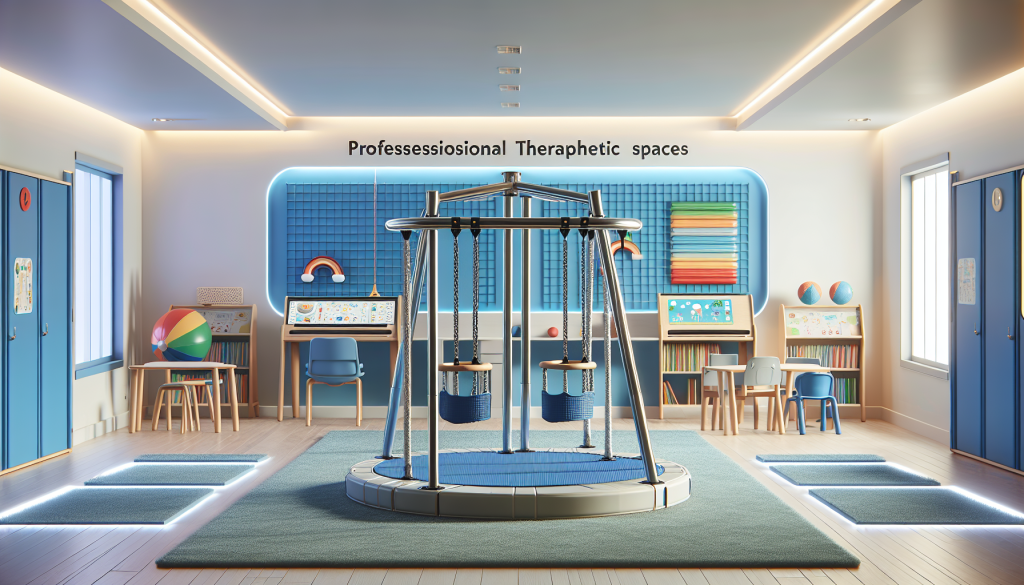
A freestanding swing frame is a portable structure that sits on the floor and supports a swing from above without any attachment to the building. It assembles like a large piece of furniture and can be placed in any room with sufficient space and ceiling height.
The Large Swing Frame is designed specifically for therapeutic use, with a swivel included and weight capacity rated for active swinging rather than just static loads.
How It Works
The frame is a steel or aluminum structure — typically an A-frame or rectangular design — that provides a overhead bar from which the swing hangs. The frame’s own weight and wide base provide stability. Most therapeutic frames come with leveling feet to accommodate uneven floors and rubber pads to protect flooring.
Strengths
- No installation required. Assemble the frame, hang the swing, and start using it. No drilling, no joist hunting, no contractor.
- Completely portable. Move it between rooms, take it to a different location, or store it when not in use. Some frames fold for easier transport.
- Works anywhere. No ceiling joist required. No door frame needed. As long as you have floor space and ceiling clearance, a freestanding frame works.
- Perfect for rentals. Zero modification to the building.
- Outdoor capable. Most therapy frames can be used outdoors on level ground, giving you the option of swinging in the backyard during good weather.
- Supports multiple swing types. Depending on the frame design, you can hang bolster swings, hammock swings, and in some cases platform swings from a freestanding frame.
Challenges
- Floor space requirement. A frame large enough for therapeutic swinging takes up a significant footprint — often 6 by 6 feet or more, plus clearance around the frame. In small rooms, this is a substantial commitment of space.
- Swing arc limited by frame size. The child can only swing as far as the frame allows. This is more generous than a doorway but less than a ceiling mount with full room clearance.
- Higher cost. A quality therapeutic swing frame is a significant purchase. However, it includes the equivalent of both the mounting hardware and the structural support, so the comparison is not entirely one-to-one with ceiling mount costs.
- Heavier and bulkier. While portable in the sense that it is not attached to the building, most therapy frames weigh 40 to 80 pounds and require disassembly for transport.
- Tipping risk if improperly loaded. Freestanding frames rely on their base width and weight for stability. If a child swings beyond the frame’s designed arc, or if an adult leans heavily on the frame, tipping is possible. Always follow the manufacturer’s weight and use guidelines.
Cost
Therapeutic freestanding frames typically range from $200 to $600 depending on size, weight capacity, and construction quality. No installation cost. Total before the swing: $200 to $600.
Best For
Renters who need a robust swing solution. Schools where ceiling mounting is not approved. Portable therapy setups that move between rooms or locations. Families who want no permanent modification to their home. Settings where multiple swing types need to be interchangeable on the same frame.
Special Considerations for Schools
Schools present unique challenges for swing installation that homes and private clinics do not face.
Building Codes and Approval
Most school buildings require facilities department approval for any structural modification, including ceiling-mounted equipment. This process can take weeks to months and may require an engineering assessment. Budget for this timeline if you are planning a ceiling mount.
Custodian and Maintenance Buy-In
Custodial staff are often the gatekeepers for room modifications. Involving them early — explaining what you need, why it matters, and how it will be maintained — prevents conflicts later. Freestanding frames are often the path of least resistance in school settings because they require no building modification and no facilities approval.
Insurance and Liability
Check with your school district’s risk management department before installing any swing. Some districts have specific requirements for equipment used with students, including inspection schedules, weight certification, and supervision ratios. Having documentation from the swing manufacturer about weight ratings, intended use, and safety guidelines helps the approval process.
ADA Compliance
If the swing is installed in a shared space, ensure it does not block accessible pathways when in use. Freestanding frames can be positioned out of circulation paths. Doorway swings, by definition, block an accessible route while in use — plan accordingly.
Special Considerations for Homes
Rental vs. Owned
If you rent, a ceiling mount requires landlord approval and may not be permitted. A freestanding frame or doorway mount avoids this issue entirely. If you own your home, a ceiling mount is the most versatile long-term option and adds value to a sensory room setup that will serve your child for years.
Ceiling Types
Standard drywall over wood joists is the easiest ceiling to work with. Plaster ceilings are more difficult to drill through but the joists behind them work the same way. Drop ceilings (suspended tile ceilings) cannot support a swing — you would need to go above the drop ceiling to the structural ceiling, which may be concrete or steel. Concrete ceilings require specialized hardware (expansion anchors or concrete screws) and professional installation.
Flooring Protection
A Safety Mat beneath the swing protects both the child and your flooring. For ceiling mounts and freestanding frames, a mat at least 2 feet wider than the swing arc on all sides is recommended. Hardwood, tile, and laminate floors can be damaged by repeated foot impacts and frame contact without padding.
Special Considerations for Clinics
Therapy clinics typically invest in ceiling mounts as the primary installation method because they need maximum versatility, support the widest range of equipment, and the space is purpose-built for therapy. Multiple mounting points at different locations in the room allow therapists to run different swings simultaneously or create obstacle courses that incorporate swinging.
For clinics, the initial cost of professional ceiling installation is easily justified by the years of daily use the mounts will support. A single ceiling mount installed correctly will serve thousands of therapy sessions.
Weight Capacity Comparison
This is one of the most important factors and one of the most commonly overlooked:
- Ceiling mount: 200 to 500+ pounds (varies by hardware and joist condition)
- Doorway mount: 100 to 200 pounds (limited by the door frame)
- Freestanding frame: 150 to 300 pounds (varies by frame design)
Remember that these are static ratings. Dynamic load during active swinging multiplies the effective force. A 100-pound child at the peak of a swing arc may generate 200 to 300 pounds of force on the mount. Always choose hardware rated well above the child’s static weight.
Space Requirements Comparison
- Ceiling mount: No floor space for the mount itself, but requires the largest clear zone around the swing — typically 6 to 8 feet in every direction of movement.
- Doorway mount: Uses the existing doorway — no additional floor space. But the doorway is blocked during use, and swing movement is confined to the frame opening.
- Freestanding frame: Largest floor footprint — the frame itself plus clearance around it. Plan for at least 8 by 8 feet of dedicated space for a standard therapy frame.
Making Your Decision
Use this decision path:
- Can you modify the ceiling? If yes, and the space is permanent (owned home, dedicated clinic, approved school room), ceiling mount gives you the most capability for the long term.
- Do you need portability or zero modification? If yes, a freestanding frame gives you the best combination of capability and flexibility.
- Is budget the primary constraint, or are you testing whether a swing will help? Start with a doorway mount. It gets a swing operational for minimal investment and lets you evaluate the benefit before committing to a larger setup.
- Will you use platform swings? If yes, you need either a ceiling mount or a frame rated for platform use. Doorway mounts will not work.
There is no wrong answer here. Every installation method delivers real therapeutic benefit. The best setup is the one that gets a swing safely operational in your space — because a swing that is actually hanging and being used will always outperform a theoretically perfect setup that never gets installed.
This article is for informational purposes only and does not constitute medical or therapeutic advice. Consult with a qualified occupational therapist for swing selection recommendations, and a licensed contractor for structural installation guidance.
