
Vestibular Input and Learning: How Movement Helps the Brain Focus
Published May 28, 2025
A teacher asks a student to sit still and pay attention. The student tries. Within two minutes, they are rocking in their chair, tapping their foot, fidgeting with a pencil, or sliding out of their seat entirely. The teacher redirects. The student tries again. The cycle repeats.
What most people see: a child who will not sit still. What neuroscience reveals: a brain that cannot focus without movement. These are fundamentally different problems, and the distinction matters enormously for how we structure classrooms, therapy sessions, and learning environments.
The Vestibular System: A Quick Primer
The vestibular system is a set of fluid-filled canals and chambers in the inner ear that detect head position and movement. It is one of the earliest sensory systems to develop — functional by 21 weeks in utero — and it is arguably the most foundational. Before a baby can see clearly, hear nuanced sounds, or coordinate their hands, their vestibular system is already processing gravity, acceleration, and spatial orientation.
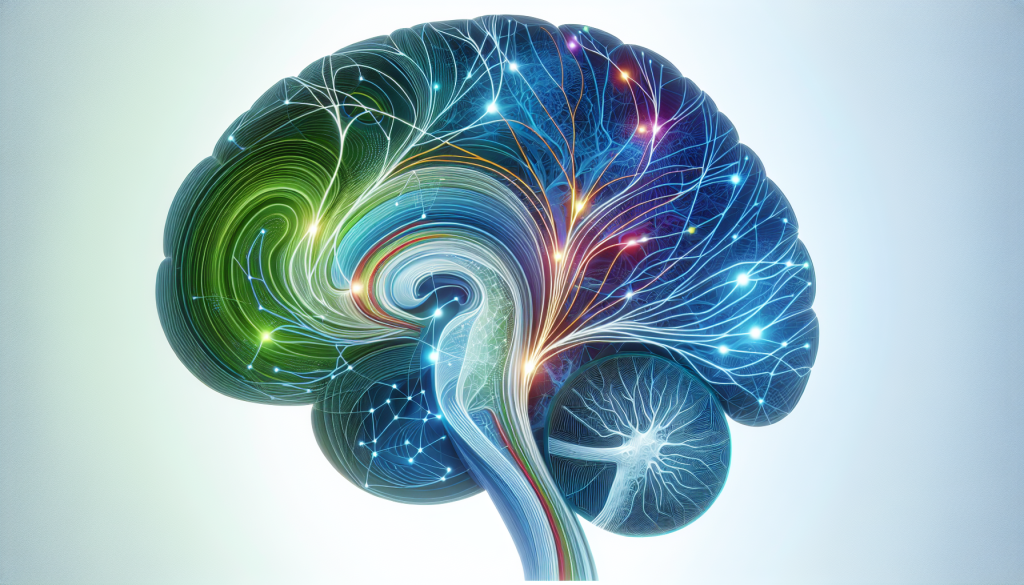
But the vestibular system does far more than tell you which way is up. It is deeply connected to brain regions that control alertness, motor coordination, memory, visual processing, and emotional regulation. These connections are what make vestibular input so powerful as a tool for learning — and why the instruction to “sit still and pay attention” is neurologically backwards for many children.
The Brain Connections That Matter
Vestibular System and the Reticular Activating System (Alertness)
The reticular activating system (RAS) is a network of neurons in the brainstem that controls arousal and alertness. It acts as the brain’s volume knob for attention — when the RAS is firing appropriately, a person feels alert, engaged, and ready to process information. When it is under-activated, they feel sluggish, drowsy, or “checked out.” When it is over-activated, they feel anxious, scattered, or overwhelmed.
The vestibular system has direct neural connections to the RAS. Movement stimulates vestibular receptors, which send signals to the RAS, which modulates alertness. This is not speculation — it is well-established neuroanatomy. When a child rocks in their chair, bounces their leg, or swings during recess, their vestibular system is feeding input to their RAS, literally adjusting their alertness level.
This is why the child who “cannot sit still” is not being defiant. Their brain is seeking the vestibular input it needs to reach an alert state. Take away the movement, and you take away the mechanism by which that brain achieves readiness to learn.
Vestibular System and the Cerebellum (Motor Coordination and Timing)
The cerebellum — the densely folded structure at the back and bottom of the brain — receives massive vestibular input. Historically understood as the brain’s motor coordination center, the cerebellum is now recognized to play critical roles in cognitive timing, sequencing, and procedural learning as well.
Research by Schmahmann and colleagues at Harvard has demonstrated that the cerebellum contributes to what they call “the universal cerebellar transform” — the ability to automatically, smoothly, and accurately coordinate complex sequences, whether those sequences are physical movements or cognitive operations like reading, mathematical computation, or language processing.
Vestibular input activates the cerebellum. When a child swings, spins, or moves through space, the cerebellum processes that input alongside motor commands, refining the brain’s ability to time and sequence actions. This cross-training effect means that vestibular activities do not just improve physical coordination — they prime the neural circuitry that supports cognitive sequencing tasks like reading (letter-to-sound sequencing), math (step-by-step problem solving), and writing (idea-to-language-to-motor sequencing).
Vestibular System and the Hippocampus (Memory)
The hippocampus is the brain’s primary structure for forming new memories, particularly spatial and episodic memories. A growing body of research has identified significant vestibular input to the hippocampus, and the implications for learning are substantial.
Studies by Smith and colleagues (2005, 2010) demonstrated that vestibular loss impairs spatial memory formation in both animals and humans. Conversely, vestibular stimulation appears to enhance hippocampal activation. A 2014 study by Hitier, Besnard, and Smith reviewed the vestibular-hippocampal pathway and concluded that vestibular input plays a role in memory processes that extends well beyond spatial navigation.
The practical implication: movement before or during learning may enhance memory encoding. A child who swings for 10 minutes before a spelling test is not wasting instructional time — they may be priming the very brain structure responsible for committing those spelling words to memory.
Vestibular System and the Visual System (Reading and Tracking)
The vestibulo-ocular reflex (VOR) is one of the fastest reflexes in the human body. It stabilizes visual images on the retina during head movement by generating compensatory eye movements. Without a functioning VOR, the world would blur every time you turned your head.
But the vestibular-visual connection goes beyond image stabilization. Vestibular input influences oculomotor control — the ability to smoothly track a moving object, shift gaze between two points (saccades), and maintain stable fixation. These are the exact visual-motor skills required for reading: tracking across a line of text, making accurate return sweeps to the next line, and maintaining stable fixation on words during decoding.
Children with poor vestibular processing often show deficits in smooth pursuit eye movements and saccadic accuracy. Vestibular-based activities — especially swinging, which provides rhythmic, predictable head movement — can improve these oculomotor skills. Multiple studies have shown that occupational therapy programs incorporating vestibular input lead to measurable improvements in visual tracking and, correspondingly, in reading fluency.
Why Sitting Still Is Harder for Some Brains
The instruction to “sit still” assumes that stillness is the default state and that movement is a distraction from it. Neurologically, this is backwards for many children — particularly those with ADHD, autism, sensory processing disorder, or developmental coordination disorder.
For these children, the default state is under-arousal. Their RAS is not firing at the level needed for sustained attention. Movement — fidgeting, rocking, bouncing — is their brain’s attempt to generate the vestibular input that would bring the RAS to an operational level. Forcing stillness does not improve attention. It removes the one mechanism the brain has for self-regulating to an attentive state.
A 2015 study by Sarver and colleagues at the University of Central Florida demonstrated this directly. They found that children with ADHD performed significantly better on working memory tasks when they were allowed to move (specifically, swivel in their chairs) compared to when they were required to sit still. The movement was not a distraction — it was a cognitive enhancer. Notably, neurotypical children in the same study showed no benefit from the movement, confirming that the effect is specific to brains that need vestibular input to reach an alert state.
Research on Movement Breaks and Academic Performance
The connection between movement and learning is not just theoretical. It has been tested in classrooms with measurable academic outcomes.
Movement Breaks Improve Focus
A 2013 study published in the Journal of Abnormal Child Psychology found that physical activity breaks during the school day significantly improved on-task behavior in elementary students, with the largest effects seen in students who had the greatest difficulty with sustained attention. The improvement was not just behavioral — teachers reported that the quality of academic work improved after movement breaks, not just the quantity of time students appeared engaged.
The 10-Minute Rule
Research consistently supports what occupational therapists have observed clinically: approximately 10 minutes of vestibular input (swinging, spinning, bouncing, or active movement) can support 30 to 45 minutes of improved seated focus. This is not a precise formula — individual children vary — but the general ratio holds across multiple studies. The vestibular input modulates arousal, and the regulatory effect persists well beyond the duration of the movement itself.
This means that a 10-minute swing session before class is not lost instructional time. It is an investment that yields 30 minutes of higher-quality attention. The net gain in actual learning time is positive.
Recess Cuts Hurt Academic Performance
In an era of increasing pressure to maximize instructional minutes, many schools have reduced or eliminated recess. The assumption is straightforward: more time in seats equals more learning. The research shows the opposite.
A landmark study by Barros, Silver, and Stein (2009) published in Pediatrics examined data from over 10,000 third-graders and found that children who had at least 15 minutes of daily recess showed better classroom behavior than those who had less or no recess. The effect was particularly strong for children in lower-income schools and children with behavioral challenges.
A 2017 meta-analysis by Alvarez-Bueno and colleagues, reviewing 26 studies, concluded that physical activity during the school day — including recess and movement breaks — had a significant positive effect on classroom behavior and academic achievement, particularly in mathematics and reading.
The neuroscience explains why: recess provides vestibular input (swinging, climbing, running), proprioceptive input (jumping, pushing, pulling), and cardiovascular activation — all of which feed into the brain systems that support attention, memory, and cognitive processing. Cutting recess removes the neurological fuel that powers afternoon learning.
Vestibular Input as an Academic Support
Understanding the vestibular-learning connection changes how we think about movement in educational settings. Movement is not the opposite of learning. For many students, it is a prerequisite for learning.
Movement Before Learning
Scheduling vestibular activities before demanding academic tasks can improve performance in those tasks. This could be a swing session, a structured movement break, or active play during recess. The key is that the vestibular input comes before the cognitive demand, giving the brain time to reach an optimal arousal state.
Practical examples:
- 10 minutes on a therapy swing before reading instruction
- A structured movement circuit (jumping, crawling, spinning) before math
- Active recess before the most cognitively demanding block of the day
- Morning arrival routine that includes movement before the first academic period
Vestibular Breaks During the Day
Even after the initial benefits of a movement session wear off, shorter vestibular breaks throughout the day can sustain attention. These do not need to be long — 3 to 5 minutes of active movement between tasks can reset the arousal system enough to support another 20 to 30 minutes of focus.
In classrooms, this looks like:
- Chair push-ups or wall push-ups between subjects (proprioceptive and mild vestibular)
- Structured movement breaks with jumping, spinning, or animal walks
- Access to a classroom swing or wobble seat during independent work
- Permission to stand, sway, or use a balance board during instruction
Sensory Diets as Academic Supports
A sensory diet — a planned schedule of sensory activities throughout the day, designed by an occupational therapist — is one of the most effective tools for supporting students who need vestibular input to learn. The term “diet” is intentional: just as a nutritional diet provides the body with what it needs at regular intervals, a sensory diet provides the nervous system with the input it needs at regular intervals.
A well-designed sensory diet for a student who needs vestibular input might include:
- Morning swing session (10 minutes) before the school day begins
- Short movement break between first and second period
- Active recess at midday
- Afternoon movement break before the final academic block
- Flexible seating options (wobble cushion, therapy ball chair) during sustained desk work
When implemented consistently, sensory diets have been shown to reduce off-task behavior, decrease disciplinary referrals, and improve academic engagement — outcomes that benefit not just the individual student but the entire classroom.
What This Means for Teachers, Therapists, and Parents
For Teachers
The fidgeting student may not need more discipline — they may need more movement. Before treating movement as a behavior problem, consider whether the student’s brain is seeking the vestibular input it needs to function. Scheduled movement breaks cost minutes but return hours of better attention. Flexible seating options and classroom-based movement opportunities are not accommodations for the few — they support learning for many.
For Therapists
The research supports what clinical experience has long suggested: vestibular input is not just a sensory strategy. It is a cognitive strategy. When you design a sensory diet that includes swing-based activities, you are not just helping a child regulate — you are directly supporting the neural systems that underlie attention, memory, and academic performance. Framing vestibular intervention in these terms can help with parent buy-in, teacher cooperation, and IEP justification.
For Parents
If your child struggles to sit still, struggles with focus, or does better academically on days when they have been physically active, you are observing the vestibular-learning connection in real time. A therapy swing at home is not just a fun activity — it is a tool that can meaningfully support your child’s ability to learn. Ten minutes of swinging before homework may accomplish more than 30 minutes of nagging about sitting still.
The Research Is Clear — Movement Is Not the Enemy of Learning
For decades, the default assumption in education has been that learning requires stillness. Sit at your desk. Face forward. Hands in your lap. Focus. But the neuroscience tells a different story. The vestibular system — activated by movement — feeds directly into the brain systems responsible for alertness, coordination, memory, and visual processing. For many children, movement is not a distraction from learning. It is the gateway to it.
Schools that build movement into the day see better attention, better behavior, and better academic outcomes. Therapists who use vestibular input as a cognitive tool see improvements that extend well beyond the sensory gym. Parents who provide their children with daily movement opportunities see calmer evenings, easier homework sessions, and better sleep.
The question is not whether movement supports learning — the research on that is settled. The question is how quickly our classrooms, therapy plans, and home routines will catch up to what the science already knows.
This article is for informational purposes only and does not constitute medical or therapeutic advice. Consult with a qualified occupational therapist for individualized sensory diet planning and vestibular intervention recommendations.
